

Scroll Top
  • Home
  • News
  • Suspline Ukraine’s hyperlocal network: how it works and what it offers to editorial offices
Suspline Ukraine’s hyperlocal network: how it works and what it offers to editorial offices

Suspline Ukraine’s hyperlocal network: how it works and what it offers to editorial offices

Поділитись

When a country is experiencing full-scale war and constant crises, news from communities often goes unnoticed by the media. This is not because nothing is happening there, but because of a lack of resources, time, and physical ability to get there. This creates information “deserts” on the map of Ukraine.

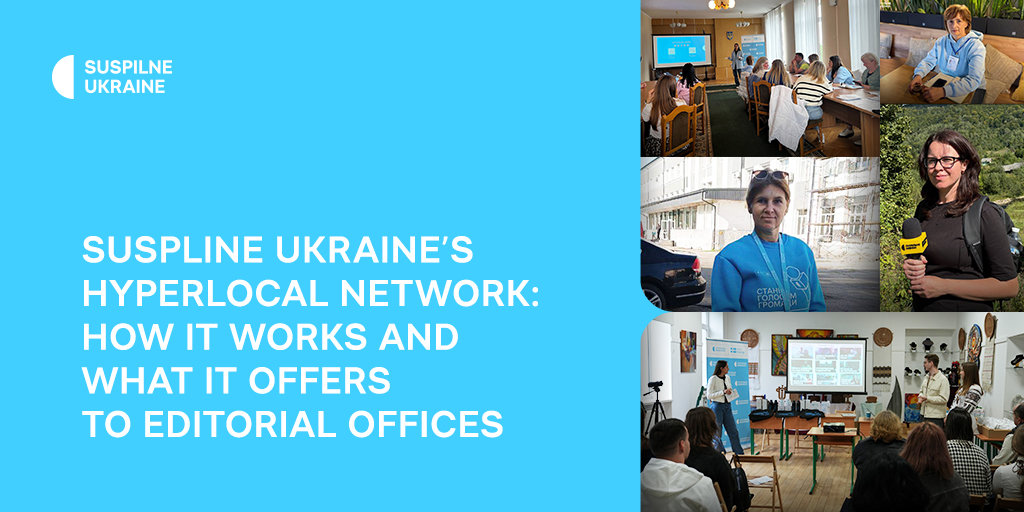
In order to get rid of them, Public Broadcasting began building a hyperlocal network of correspondents in 2021 — people who live in communities and report on life there. The project started in three regions — Chernihiv, Sumy, and Kharkiv. In 2023, the network expanded to five more regions, and in 2025, it reached the national level (except for the temporarily occupied territories), writes Suspline Ukraine project manager Yevheniia Haifer in an article for the Institute of Mass Information.

In 2025, Suspline Ukraine teams visited 84 communities in 12 regions and reached over a thousand residents. As a result, the team was able to recruit nearly 50 new hyperlocal correspondents. The distance from regional centers to the communities where correspondents work is sometimes measured in hundreds of kilometers (such as from Odesa to Izmayil).
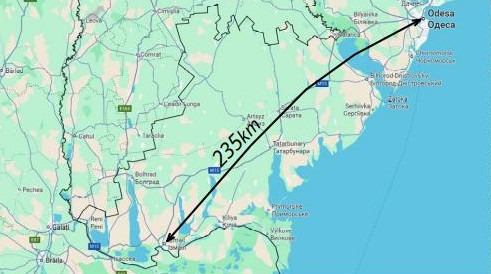
Distance from Odesa to Izmayil

50 correspondents — hundreds of stories from communities

Thanks to research conducted by Suspline Ukraine as part of a project to develop a hyperlocal network (involving community members aged 18 to 70), branches gained a clear understanding of communities’ information needs and feedback on the quality of work in the regions. This data was confirmed by live communication during community meetings: people lack verified local information that explains the context and answers the key question — “what does this mean for us?”

Official communications from local authorities often remain dry and formal, without explaining the consequences for residents. At the same time, anonymous Telegram channels respond quickly and emotionally, but often spread unverified or incomplete information. It is in this gap between official communication and informal sources that the need for reliable local media that can be trusted arises.

Suspline Ukraine’s hyperlocal correspondent has become that very “verified point of entry” — a person who lives in the community, knows the local context well, sees the problems firsthand, and can report on events quickly and responsibly, based on journalistic standards. This is confirmed by research results: a report by Kantar Ukraine states that Suspline Ukraine’s materials enjoy high credibility among the audience, its digital pages serve as an early warning system, which is important during blackouts or in frontline communities, and radio is the only connection people have to the world in conditions of unstable internet.

Hyperlocal correspondents prepare content about the life of their communities and at the same time place local events in a national context: how forcibly displaced Ukrainians live, reforms in communities, stories of military personnel, how budget funds are used in communities, information about the situation in frontline areas, in particular the consequences of shelling. Whereas previously events in cities such as Brody, Sheptytsky, Burshtyn, or Kalush only made it into regional news in the event of emergencies, today Suspline Ukraine provides systematic information coverage there.

How do hyperlocal correspondents work?

A hyperlocal correspondent for Suspline Ukraine is a journalist who lives in the community rather than traveling from the regional center, knows the context of the community, and responds to events faster than traditional traveling film crews. They work on several platforms at once — for the website, social media, radio, and TV channels of Suspline Ukraine — and are involved in the editorial planning of the branch. They have an editor and clear working standards. Correspondents can shape the local agenda and become a source of content not only for Suspline Ukraine’s regional news, but also for national broadcasts and international exchanges with the European Broadcasting Union.

For regional teams, a hyperlocal network means not only more news, but also a change in approach to work: some topics no longer need to be sought out — they come directly from the communities. This reduces the workload on field crews, provides a deeper understanding of the local context, and allows editorial teams to work more strategically.

Hyperlocal correspondents are integrated into Suspline Ukraine’s editorial system, undergo training, and receive constant feedback from editors.
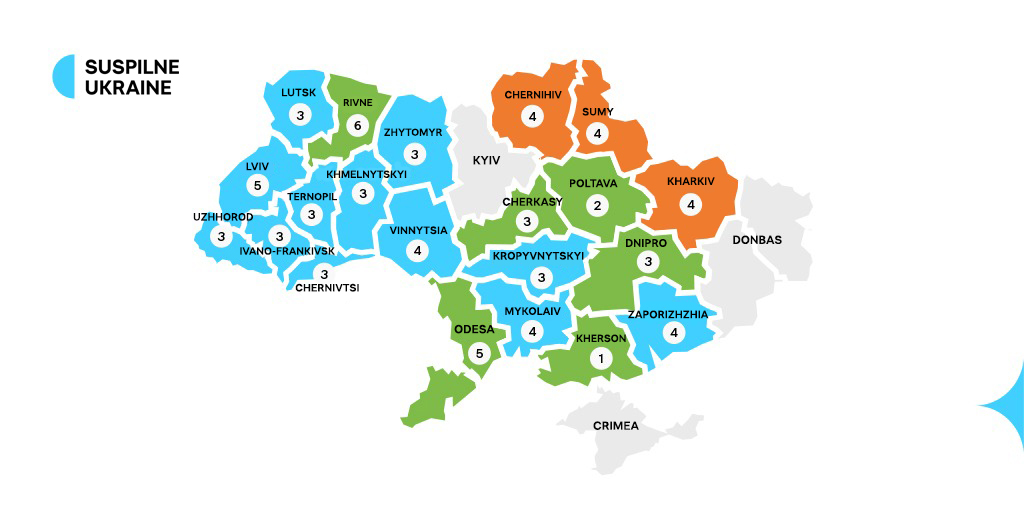
Regional distribution of correspondents in Ukrainian communities (as of December 2025): number — number of correspondents in the region; orange — network expansion in 2021 and reinforcement in 2025, green — 2023, blue — 2025
Regional distribution of correspondents in Ukrainian communities

Behind each number is a specific name. Here are a few of them

Tetiana Boiarchuk from the city of Stryi in the Lviv region chose Suspilne Lviv because of its independence. At the beginning of the collaboration, she was convinced: “The Stryi region is ‘rich’ in topics that are worth talking about.” And so, after five months of active work, she prepared 39 articles for the website and nine videos.
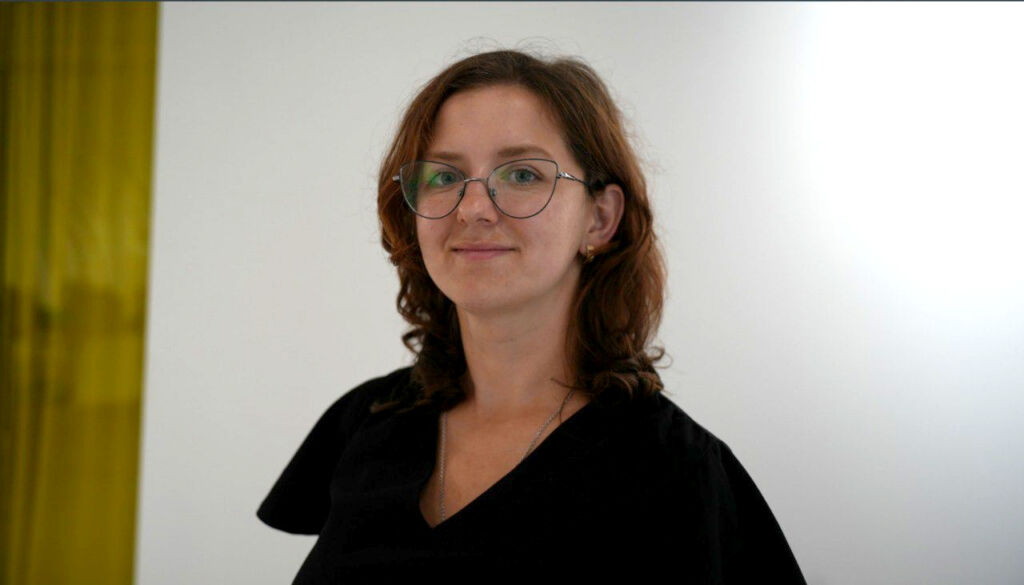
Tetyana Boyarchuk
Tetyana Boyarchuk

Antonina Glushchenko joined the Suspilne Zhytomyr team in September and has already prepared 56 news stories. She is a teacher by profession. She worked in education and in print media in Malyn, and for over 15 years as a communications specialist. Antonina says, “Our community deserves to be heard and seen more.”
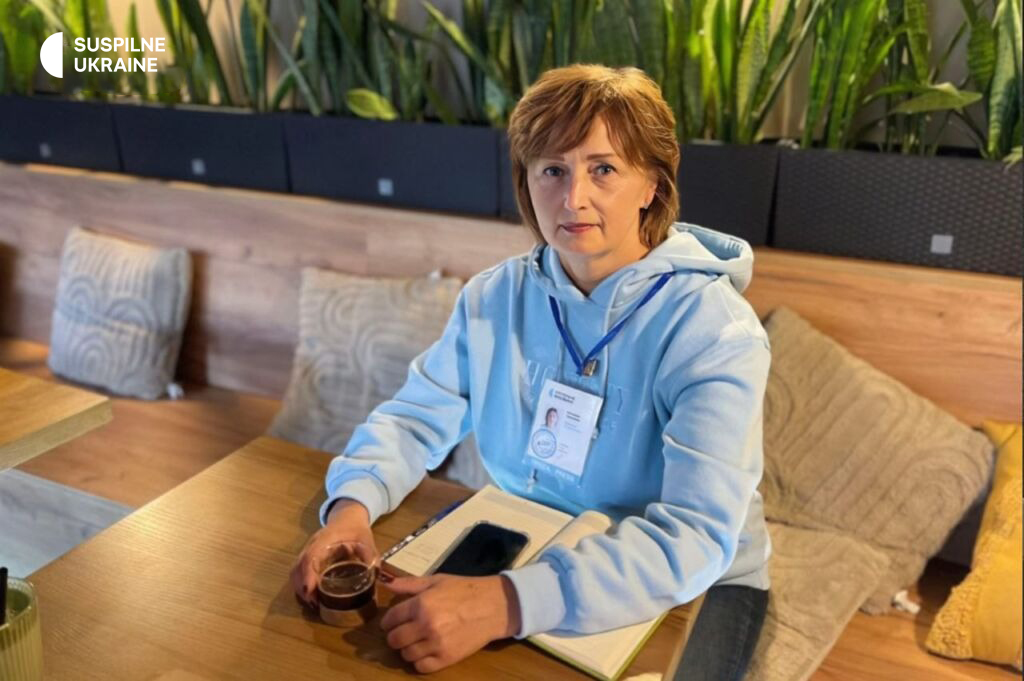
Antonina Glushchenko

Training as the foundation of quality

As part of its efforts to develop a network of hyperlocal correspondents in communities across Ukraine, Suspline Ukraine Broadcasting has created an online training course on universal journalism on the Prometheus online education platform — Journalism 360: Tools and Techniques from Suspline Ukraine. The course was developed by journalists and editors at Suspline Ukraine and covers key aspects of modern journalism: news standards, working with sources and fact-checking, ethics, journalist safety during wartime, the specifics of multimedia storytelling, and creating content for different platforms.

About 500 applicants for the position of hyperlocal correspondent for Suspline Ukraine gained access to the course, and based on its results, regional teams made their selection for employment.

“I have been working mainly with texts for a long time, and now I see how much journalism has changed. Many new formats, tools, and approaches have appeared,” shared Antonina Glushchenko from Zhytomyr region, sharing her impressions of the course. “The materials are presented in an accessible way, with examples. I especially liked the section on storytelling—I am already using this knowledge. People like to read about others, those who are close to them.”

“The modules, tests, and practical tasks give you the opportunity not only to try your hand at journalism, but also to test your skills and knowledge. To facilitate learning, examples of reports, essays, interviews, and photo reports are provided. Everything is clear and accessible. It is very important that this course includes a module on journalist safety. I advise everyone to take the training from Suspilne, it can be the beginning of change in your life,” adds Maya Kovinchuk from the Vinnytsia region.

Since October 31, 2025, the course has been open to anyone interested, and as of today, more than 1,087 students have already registered for it.

When local history becomes national

The first results were not long in coming. The materials of the new hyperlocal correspondents have received and continue to receive tens of thousands of views on the Suspline Ukraine pages. And each video report also generates 5 to 20 shorts and reels for social media.

For example, there is a story about Serhiy Vorona’s family, who moved from Zaporizhzhia to Ivano-Frankivsk more than three years ago, are learning farming, and are “turning their yard into a place of harmony between people, animals, and peace.” The story has garnered over 100,000 views on YouTube and a total of 618,700 views on social media. Yulia Chaborak, a hyperlocal correspondent for Suspilne Ivano-Frankivsk, worked on it. In five months, three correspondents from the branch published 65 stories, including 26 videos.

The story of Renato Stagnoli, an Italian who has been living in a village in the Lviv region for almost 10 years, is truly touching. The man has become part of the community, sings in a choir, tends to the garden and looks after the monuments in the village cemetery. Every evening, he plays church songs and hymns from two countries on his trumpet near his house. This was one of the first stories for Khristina Kakhnych, a new hyperlocal correspondent for Suspilne Lviv. The story has garnered about 45,000 views on YouTube, and the total reach of the Instagram and Facebook posts is almost 700,000. In total, over five months, five correspondents from the branch prepared 123 pieces of content for the website and shot 44 videos.

In frontline areas, verified information becomes particularly valuable because it can save lives. And when it is exclusive information, the material becomes a leader in views on Ukrainian YouTube. For example, the documentary project “Senezh. Operation Revenge,” filmed by Nadiya Martyshko, a correspondent for Suspilne Chernihiv, in 2025, garnered over 1 million views and went viral even among the military.

To be continued 

Although Suspline Ukraine’s hyperlocal network emerged as a response to information “deserts,” over time it has become much more than that. It is a network of people who know their communities by name, personally witness changes, and report on them responsibly—in accordance with journalistic standards and with an understanding of the local context.

At a time when trust in information is crucial, hyperlocal correspondents for Suspline Ukraine’s local editorial offices are a long-term investment — a model that changes the way regional teams work, strengthens the national agenda with local voices, and ensures the sustainability of independent journalism in wartime.

*Suspline Ukraine implemented the project to expand its hyperlocal network as part of and thanks to the project “Support for Editorial and Digital Transformation and Development of Corporate Culture in Public Media in Ukraine,” funded by the Swedish International Development Cooperation Agency (Sida).

First published on imi.org.ua.

Поділитись
Suspline Ukraine’s hyperlocal network: how it works and what it offers to editorial offices

Suspline Ukraine’s hyperlocal network: how it works and what it offers to editorial offices

Поділитись

When a country is experiencing full-scale war and constant crises, news from communities often goes unnoticed by the media. This is not because nothing is happening there, but because of a lack of resources, time, and physical ability to get there. This creates information “deserts” on the map of Ukraine.

In order to get rid of them, Public Broadcasting began building a hyperlocal network of correspondents in 2021 — people who live in communities and report on life there. The project started in three regions — Chernihiv, Sumy, and Kharkiv. In 2023, the network expanded to five more regions, and in 2025, it reached the national level (except for the temporarily occupied territories), writes Suspline Ukraine project manager Yevheniia Haifer in an article for the Institute of Mass Information.

In 2025, Suspline Ukraine teams visited 84 communities in 12 regions and reached over a thousand residents. As a result, the team was able to recruit nearly 50 new hyperlocal correspondents. The distance from regional centers to the communities where correspondents work is sometimes measured in hundreds of kilometers (such as from Odesa to Izmayil).

Distance from Odesa to Izmayil

50 correspondents — hundreds of stories from communities

Thanks to research conducted by Suspline Ukraine as part of a project to develop a hyperlocal network (involving community members aged 18 to 70), branches gained a clear understanding of communities’ information needs and feedback on the quality of work in the regions. This data was confirmed by live communication during community meetings: people lack verified local information that explains the context and answers the key question — “what does this mean for us?”

Official communications from local authorities often remain dry and formal, without explaining the consequences for residents. At the same time, anonymous Telegram channels respond quickly and emotionally, but often spread unverified or incomplete information. It is in this gap between official communication and informal sources that the need for reliable local media that can be trusted arises.

Suspline Ukraine’s hyperlocal correspondent has become that very “verified point of entry” — a person who lives in the community, knows the local context well, sees the problems firsthand, and can report on events quickly and responsibly, based on journalistic standards. This is confirmed by research results: a report by Kantar Ukraine states that Suspline Ukraine’s materials enjoy high credibility among the audience, its digital pages serve as an early warning system, which is important during blackouts or in frontline communities, and radio is the only connection people have to the world in conditions of unstable internet.

Hyperlocal correspondents prepare content about the life of their communities and at the same time place local events in a national context: how forcibly displaced Ukrainians live, reforms in communities, stories of military personnel, how budget funds are used in communities, information about the situation in frontline areas, in particular the consequences of shelling. Whereas previously events in cities such as Brody, Sheptytsky, Burshtyn, or Kalush only made it into regional news in the event of emergencies, today Suspline Ukraine provides systematic information coverage there.

How do hyperlocal correspondents work?

A hyperlocal correspondent for Suspline Ukraine is a journalist who lives in the community rather than traveling from the regional center, knows the context of the community, and responds to events faster than traditional traveling film crews. They work on several platforms at once — for the website, social media, radio, and TV channels of Suspline Ukraine — and are involved in the editorial planning of the branch. They have an editor and clear working standards. Correspondents can shape the local agenda and become a source of content not only for Suspline Ukraine’s regional news, but also for national broadcasts and international exchanges with the European Broadcasting Union.

For regional teams, a hyperlocal network means not only more news, but also a change in approach to work: some topics no longer need to be sought out — they come directly from the communities. This reduces the workload on field crews, provides a deeper understanding of the local context, and allows editorial teams to work more strategically.

Hyperlocal correspondents are integrated into Suspline Ukraine’s editorial system, undergo training, and receive constant feedback from editors.

Regional distribution of correspondents in Ukrainian communities (as of December 2025): number — number of correspondents in the region; orange — network expansion in 2021 and reinforcement in 2025, green — 2023, blue — 2025
Regional distribution of correspondents in Ukrainian communities

Behind each number is a specific name. Here are a few of them

Tetiana Boiarchuk from the city of Stryi in the Lviv region chose Suspilne Lviv because of its independence. At the beginning of the collaboration, she was convinced: “The Stryi region is ‘rich’ in topics that are worth talking about.” And so, after five months of active work, she prepared 39 articles for the website and nine videos.

Tetyana Boyarchuk
Tetyana Boyarchuk

Antonina Glushchenko joined the Suspilne Zhytomyr team in September and has already prepared 56 news stories. She is a teacher by profession. She worked in education and in print media in Malyn, and for over 15 years as a communications specialist. Antonina says, “Our community deserves to be heard and seen more.”

Antonina Glushchenko

Training as the foundation of quality

As part of its efforts to develop a network of hyperlocal correspondents in communities across Ukraine, Suspline Ukraine Broadcasting has created an online training course on universal journalism on the Prometheus online education platform — Journalism 360: Tools and Techniques from Suspline Ukraine. The course was developed by journalists and editors at Suspline Ukraine and covers key aspects of modern journalism: news standards, working with sources and fact-checking, ethics, journalist safety during wartime, the specifics of multimedia storytelling, and creating content for different platforms.

About 500 applicants for the position of hyperlocal correspondent for Suspline Ukraine gained access to the course, and based on its results, regional teams made their selection for employment.

“I have been working mainly with texts for a long time, and now I see how much journalism has changed. Many new formats, tools, and approaches have appeared,” shared Antonina Glushchenko from Zhytomyr region, sharing her impressions of the course. “The materials are presented in an accessible way, with examples. I especially liked the section on storytelling—I am already using this knowledge. People like to read about others, those who are close to them.”

“The modules, tests, and practical tasks give you the opportunity not only to try your hand at journalism, but also to test your skills and knowledge. To facilitate learning, examples of reports, essays, interviews, and photo reports are provided. Everything is clear and accessible. It is very important that this course includes a module on journalist safety. I advise everyone to take the training from Suspilne, it can be the beginning of change in your life,” adds Maya Kovinchuk from the Vinnytsia region.

Since October 31, 2025, the course has been open to anyone interested, and as of today, more than 1,087 students have already registered for it.

When local history becomes national

The first results were not long in coming. The materials of the new hyperlocal correspondents have received and continue to receive tens of thousands of views on the Suspline Ukraine pages. And each video report also generates 5 to 20 shorts and reels for social media.

For example, there is a story about Serhiy Vorona’s family, who moved from Zaporizhzhia to Ivano-Frankivsk more than three years ago, are learning farming, and are “turning their yard into a place of harmony between people, animals, and peace.” The story has garnered over 100,000 views on YouTube and a total of 618,700 views on social media. Yulia Chaborak, a hyperlocal correspondent for Suspilne Ivano-Frankivsk, worked on it. In five months, three correspondents from the branch published 65 stories, including 26 videos.

The story of Renato Stagnoli, an Italian who has been living in a village in the Lviv region for almost 10 years, is truly touching. The man has become part of the community, sings in a choir, tends to the garden and looks after the monuments in the village cemetery. Every evening, he plays church songs and hymns from two countries on his trumpet near his house. This was one of the first stories for Khristina Kakhnych, a new hyperlocal correspondent for Suspilne Lviv. The story has garnered about 45,000 views on YouTube, and the total reach of the Instagram and Facebook posts is almost 700,000. In total, over five months, five correspondents from the branch prepared 123 pieces of content for the website and shot 44 videos.

In frontline areas, verified information becomes particularly valuable because it can save lives. And when it is exclusive information, the material becomes a leader in views on Ukrainian YouTube. For example, the documentary project “Senezh. Operation Revenge,” filmed by Nadiya Martyshko, a correspondent for Suspilne Chernihiv, in 2025, garnered over 1 million views and went viral even among the military.

To be continued 

Although Suspline Ukraine’s hyperlocal network emerged as a response to information “deserts,” over time it has become much more than that. It is a network of people who know their communities by name, personally witness changes, and report on them responsibly—in accordance with journalistic standards and with an understanding of the local context.

At a time when trust in information is crucial, hyperlocal correspondents for Suspline Ukraine’s local editorial offices are a long-term investment — a model that changes the way regional teams work, strengthens the national agenda with local voices, and ensures the sustainability of independent journalism in wartime.

*Suspline Ukraine implemented the project to expand its hyperlocal network as part of and thanks to the project “Support for Editorial and Digital Transformation and Development of Corporate Culture in Public Media in Ukraine,” funded by the Swedish International Development Cooperation Agency (Sida).

First published on imi.org.ua.

Поділитись
Privacy Preferences
When you visit our website, it may store information through your browser from specific services, usually in form of cookies. Here you can change your privacy preferences. Please note that blocking some types of cookies may impact your experience on our website and the services we offer.