

Scroll Top
  • Home
  • News
  • Preparing for the professional qualification assessment “Journalist”: experience of the first applicants
Preparing for the professional qualification assessment “Journalist”: experience of the first applicants

Preparing for the professional qualification assessment “Journalist”: experience of the first applicants

Поділитись

Since September last year, Ukraine’s first Qualification Center, which awards the professional qualification “Journalist,” has been operating at Suspilne Ukraine. Five applicants have already successfully passed the assessment and received certificates of professional qualification. Among them are Yaroslav Pryshchepa from Kyiv and Ilona Kasatkina from Zhytomyr. In a quick interview, they shared their impressions of the process and advice for those who are just preparing to take the exam.
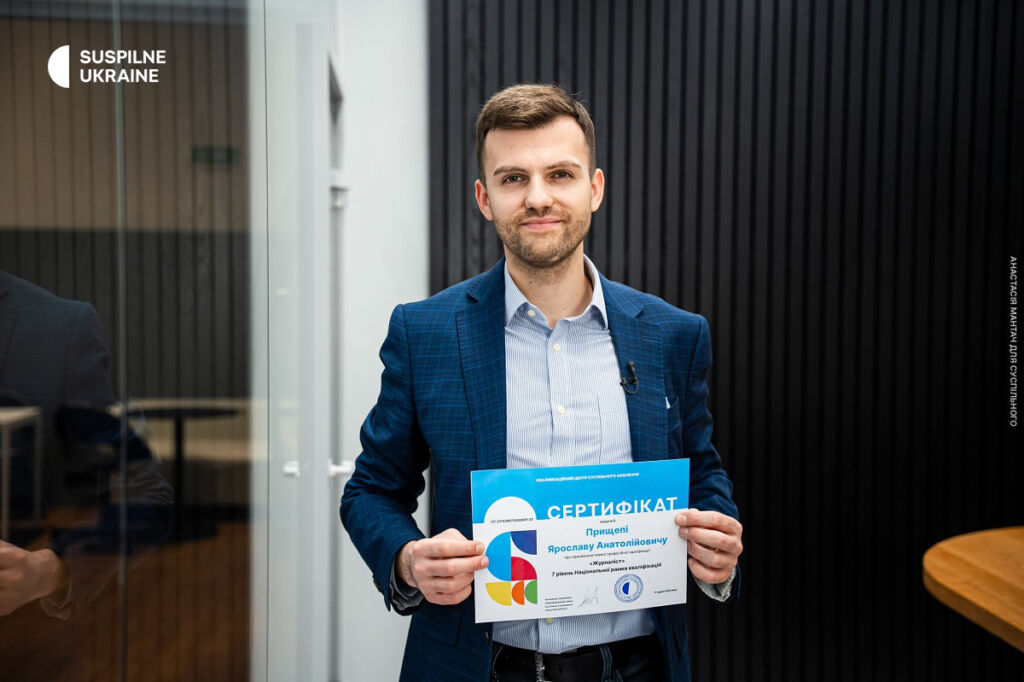
Yaroslav Pryshchepa, Kyiv/ Photo by Anastasiia Mantach for Suspilne
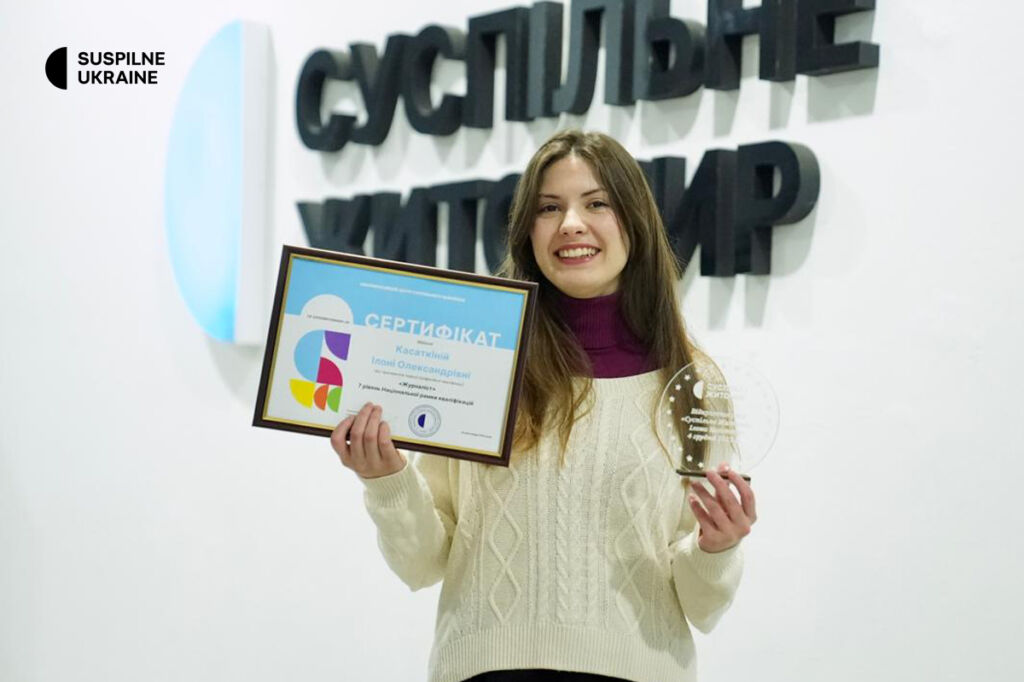
Ilona Kasatkina, Zhytomyr. Photo by Oleksii Chyrko
Ilona Kasatkina

— How would you rate the organization of the assessment procedure?

Yaroslav: “The assessment procedure was organized in a convenient and comfortable manner, in particular thanks to the possibility of taking it remotely. This allowed people from different cities to participate and avoided the need to gather everyone in one room. At the same time, the assessment was supervised by a commission, which ensured the transparency of the process.”

Ilona: “Qualification Center of Suspilne Ukraine was a great opportunity for me to quickly obtain a master’s level professional qualification, as it opens up new prospects for professional development, especially in the context of my work at Suspilne. From the very first stage, particularly during the interview, I felt the support and friendliness of the commission, which created a pleasant atmosphere.” 

— How difficult was the exam and what was its format? 

Yaroslav:  “The exam itself was not easy. It consisted of a test section, which included both basic questions — understandable to those who work in this field on a daily basis — and less obvious ones. In particular, there were questions that were not directly related to my current activities: about working with a camera, lighting in a room. This forced me to take a broader view of the profession and use all my knowledge to the maximum. The part with open-ended questions, where I had to give detailed answers, was particularly interesting. It turned out to be the most practical, but also the most intense — sometimes there was not enough time, so I had to quickly formulate my thoughts and carefully weigh each answer. A separate stage — the defense, the presentation of answers to the evaluators — felt like defending a term paper at university. In general, I expected it to be a little easier, but I am glad that the exam turned out to be exactly like this. It confirmed that years of work in journalism really gave me the necessary skills and knowledge.”

Ilona: “I would rate the level of difficulty of the test as above average, because the various tasks at different stages required knowledge, attention, and concentration. In my opinion, there was enough time to think carefully, answer, and check at the end.”

— How to prepare for the exam?

Yaroslav: “You should try to cover as many aspects of journalism and editing as possible. There will be difficult questions that may relate, for example, to social media and the specifics of video shooting. In general, I recommend working intensively, a lot, and productively, and then everything will definitely work out.”

Ilona: “For those who are just planning to take this assessment, I advise you not to be afraid: the atmosphere is really comfortable, and the process is professionally organized. As for preparation, a significant part of the tasks is devoted to journalistic standards and ethics, but if you are a practicing journalist, these issues will not cause any difficulties, because we encounter them every day in our work. I was lucky because, in parallel with my work, I completed my bachelor’s degree at the National University of «Kyiv-Mohyla Academy» this summer, and now I am continuing my education at the Taras Shevchenko National University of Kyiv, specializing in journalism and media communications. Thanks to this, the theoretical basis was relevant and fresh in my memory. Therefore, during my preparation, I focused on key documents: I studied the Code of Ethics for Ukrainian Journalists and the legislation on access to public information. I also recommend refreshing your knowledge of first aid and the specifics of working in frontline areas.

Qualification Center of Suspilne Ukraine is authorized by the National Agency for Qualifications to conduct assessments and award the professional qualification of “Journalist,” i.e., to recognize the knowledge and skills acquired both during training and during practical work, through non-formal and informal education, and to confirm qualifications obtained abroad. This is the first and so far the only such center in Ukraine. After successful assessment, participants receive an official certificate that is recognized by employers and the state and entered into the relevant register.

Suspilne Ukraine is an independent media company with a strong presence across all platforms: the TV channels PershyiSuspilne KulturaSuspilne Sport, and a national network of local channels; the radio stations Ukrainske Radio, Radio Promin, Radio Kultura, Radiotochka. Find only verified news on suspilne.media, as well as on our national and local digital platforms. We broadcast in minority languages, represent Ukraine at the Eurovision Song Contest, develop the children’s platform Brobaks, and train media professionals through the Public Media Academy. Our Suspilne Mediateka platform offers unique video and audio archives dating from the 1920s to today. Defending freedom in Ukraine. 

Поділитись
Preparing for the professional qualification assessment “Journalist”: experience of the first applicants

Preparing for the professional qualification assessment “Journalist”: experience of the first applicants

Поділитись

Since September last year, Ukraine’s first Qualification Center, which awards the professional qualification “Journalist,” has been operating at Suspilne Ukraine. Five applicants have already successfully passed the assessment and received certificates of professional qualification. Among them are Yaroslav Pryshchepa from Kyiv and Ilona Kasatkina from Zhytomyr. In a quick interview, they shared their impressions of the process and advice for those who are just preparing to take the exam.

Yaroslav Pryshchepa, Kyiv/ Photo by Anastasiia Mantach for Suspilne
Ilona Kasatkina, Zhytomyr. Photo by Oleksii Chyrko
Ilona Kasatkina

— How would you rate the organization of the assessment procedure?

Yaroslav: “The assessment procedure was organized in a convenient and comfortable manner, in particular thanks to the possibility of taking it remotely. This allowed people from different cities to participate and avoided the need to gather everyone in one room. At the same time, the assessment was supervised by a commission, which ensured the transparency of the process.”

Ilona: “Qualification Center of Suspilne Ukraine was a great opportunity for me to quickly obtain a master’s level professional qualification, as it opens up new prospects for professional development, especially in the context of my work at Suspilne. From the very first stage, particularly during the interview, I felt the support and friendliness of the commission, which created a pleasant atmosphere.” 

— How difficult was the exam and what was its format? 

Yaroslav:  “The exam itself was not easy. It consisted of a test section, which included both basic questions — understandable to those who work in this field on a daily basis — and less obvious ones. In particular, there were questions that were not directly related to my current activities: about working with a camera, lighting in a room. This forced me to take a broader view of the profession and use all my knowledge to the maximum. The part with open-ended questions, where I had to give detailed answers, was particularly interesting. It turned out to be the most practical, but also the most intense — sometimes there was not enough time, so I had to quickly formulate my thoughts and carefully weigh each answer. A separate stage — the defense, the presentation of answers to the evaluators — felt like defending a term paper at university. In general, I expected it to be a little easier, but I am glad that the exam turned out to be exactly like this. It confirmed that years of work in journalism really gave me the necessary skills and knowledge.”

Ilona: “I would rate the level of difficulty of the test as above average, because the various tasks at different stages required knowledge, attention, and concentration. In my opinion, there was enough time to think carefully, answer, and check at the end.”

— How to prepare for the exam?

Yaroslav: “You should try to cover as many aspects of journalism and editing as possible. There will be difficult questions that may relate, for example, to social media and the specifics of video shooting. In general, I recommend working intensively, a lot, and productively, and then everything will definitely work out.”

Ilona: “For those who are just planning to take this assessment, I advise you not to be afraid: the atmosphere is really comfortable, and the process is professionally organized. As for preparation, a significant part of the tasks is devoted to journalistic standards and ethics, but if you are a practicing journalist, these issues will not cause any difficulties, because we encounter them every day in our work. I was lucky because, in parallel with my work, I completed my bachelor’s degree at the National University of «Kyiv-Mohyla Academy» this summer, and now I am continuing my education at the Taras Shevchenko National University of Kyiv, specializing in journalism and media communications. Thanks to this, the theoretical basis was relevant and fresh in my memory. Therefore, during my preparation, I focused on key documents: I studied the Code of Ethics for Ukrainian Journalists and the legislation on access to public information. I also recommend refreshing your knowledge of first aid and the specifics of working in frontline areas.

Qualification Center of Suspilne Ukraine is authorized by the National Agency for Qualifications to conduct assessments and award the professional qualification of “Journalist,” i.e., to recognize the knowledge and skills acquired both during training and during practical work, through non-formal and informal education, and to confirm qualifications obtained abroad. This is the first and so far the only such center in Ukraine. After successful assessment, participants receive an official certificate that is recognized by employers and the state and entered into the relevant register.

Suspilne Ukraine is an independent media company with a strong presence across all platforms: the TV channels PershyiSuspilne KulturaSuspilne Sport, and a national network of local channels; the radio stations Ukrainske Radio, Radio Promin, Radio Kultura, Radiotochka. Find only verified news on suspilne.media, as well as on our national and local digital platforms. We broadcast in minority languages, represent Ukraine at the Eurovision Song Contest, develop the children’s platform Brobaks, and train media professionals through the Public Media Academy. Our Suspilne Mediateka platform offers unique video and audio archives dating from the 1920s to today. Defending freedom in Ukraine. 
Поділитись
Privacy Preferences
When you visit our website, it may store information through your browser from specific services, usually in form of cookies. Here you can change your privacy preferences. Please note that blocking some types of cookies may impact your experience on our website and the services we offer.