

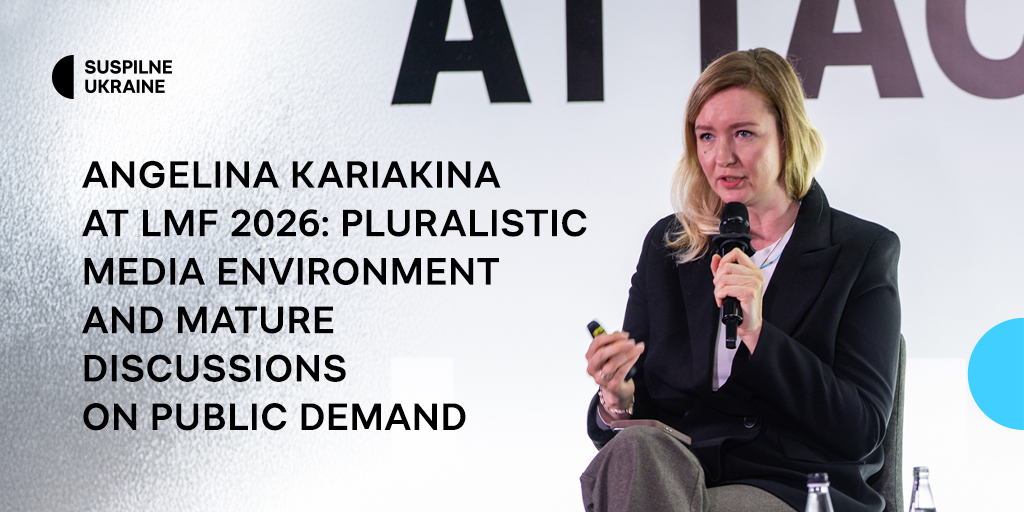
During the full-scale war, Ukrainians are ready for difficult and open conversations about democracy, mobilization, freedom of speech, and the limits of acceptable wartime restrictions, while media outlets need to learn how to cover sensitive topics without polarization or emotional pressure. This was stated by journalist and media manager, advisor to the Head of Managing Board of Suspilne Ukraine, and co-founder of the Laboratory of Public Interest Journalism Angelina Kariakina during the discussion “How Ukrainians Define Democratic Boundaries During War” at LMF 2026. As part of the discussion, together with journalist, documentary filmmaker, and co-founder of the Laboratory of Public Interest Journalism Nataliya Gumenyuk, she presented the results of the LPJI study “Ukraine Facing a Double Challenge” on how Ukrainians perceive the boundaries of democracy during wartime.
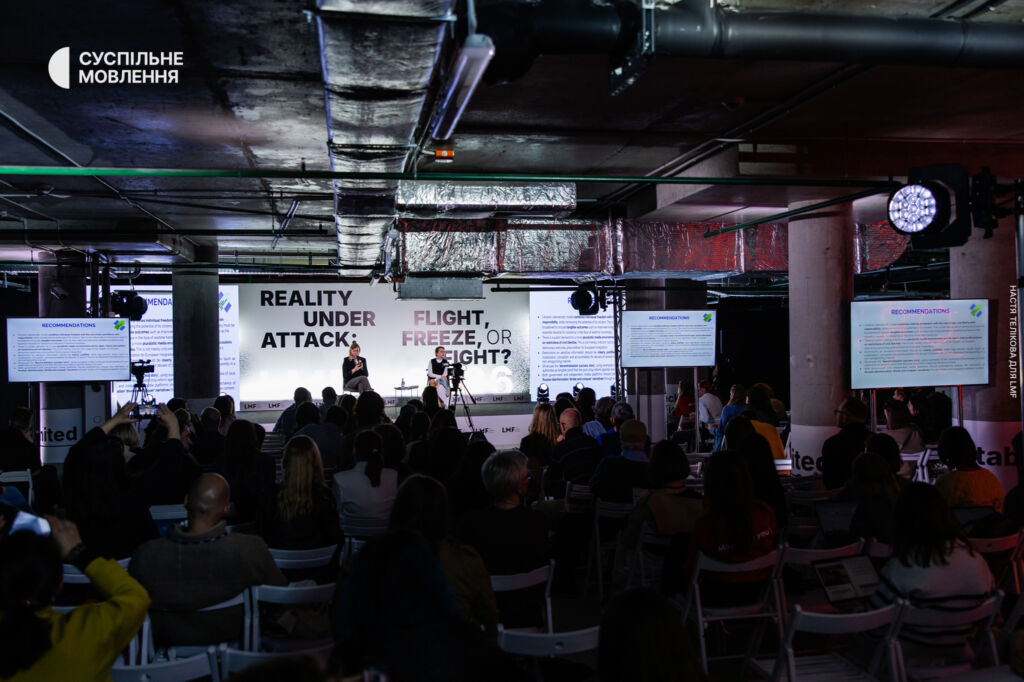
According to Angelina Kariakina, the current conversation about democracy in Ukraine requires a broader approach and concrete explanations for society.
“There is a public demand for a more pluralistic media environment and for open, mature discussions. And this is a sign of the health of Ukrainian democracy. Restrictions on sensitive information must be clearly justified, not simply prohibited, while high-tension topics such as mobilization should be covered transparently and in a non-polarizing way,” said Angelina Kariakina.
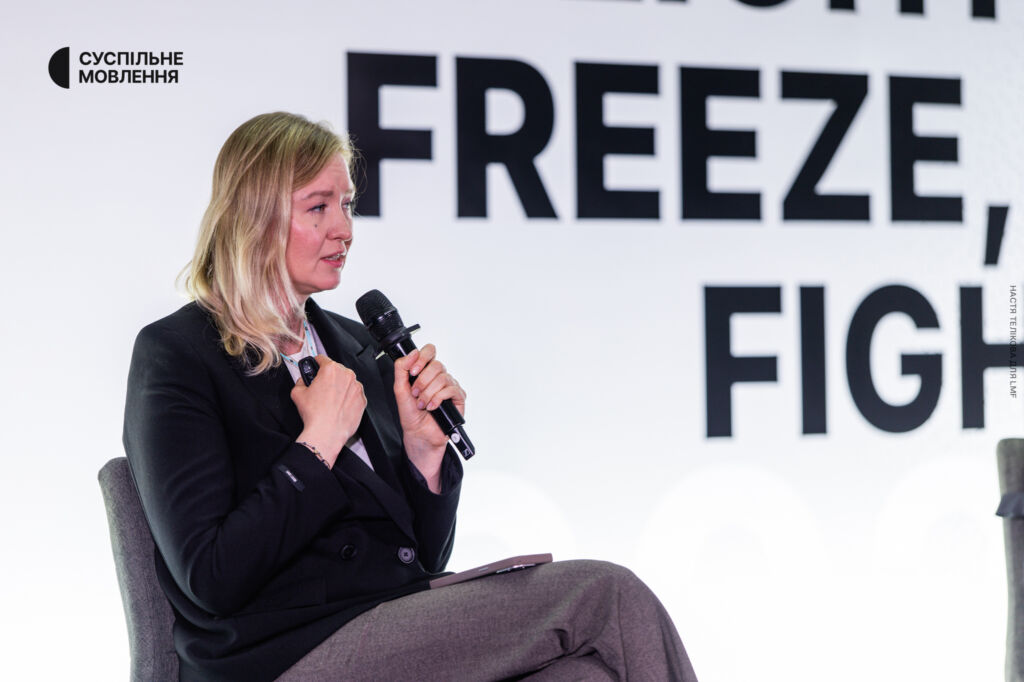
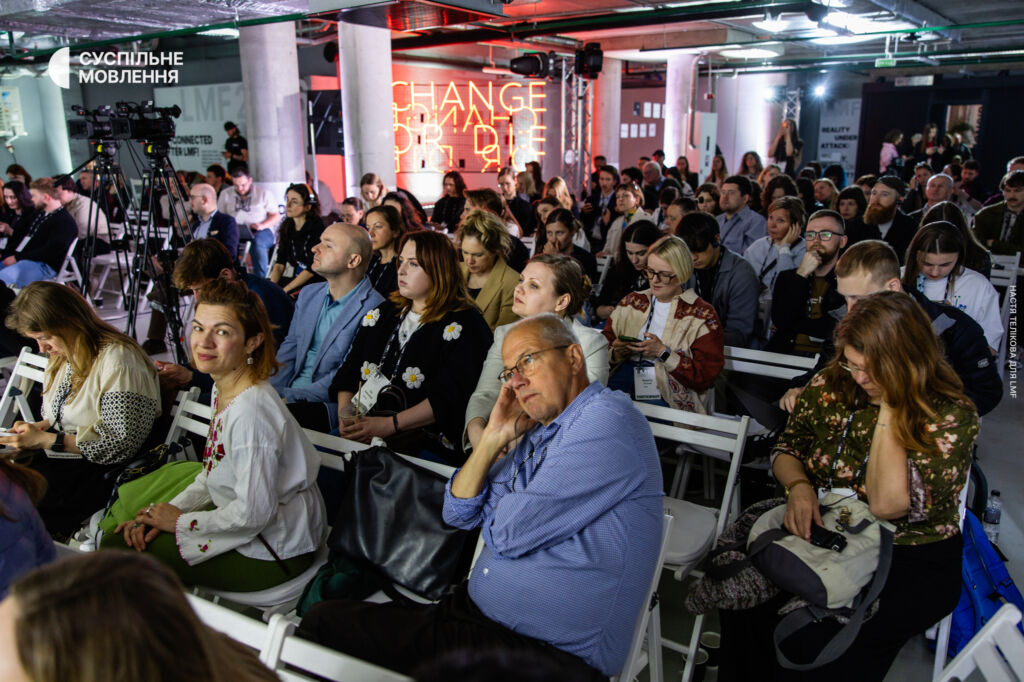
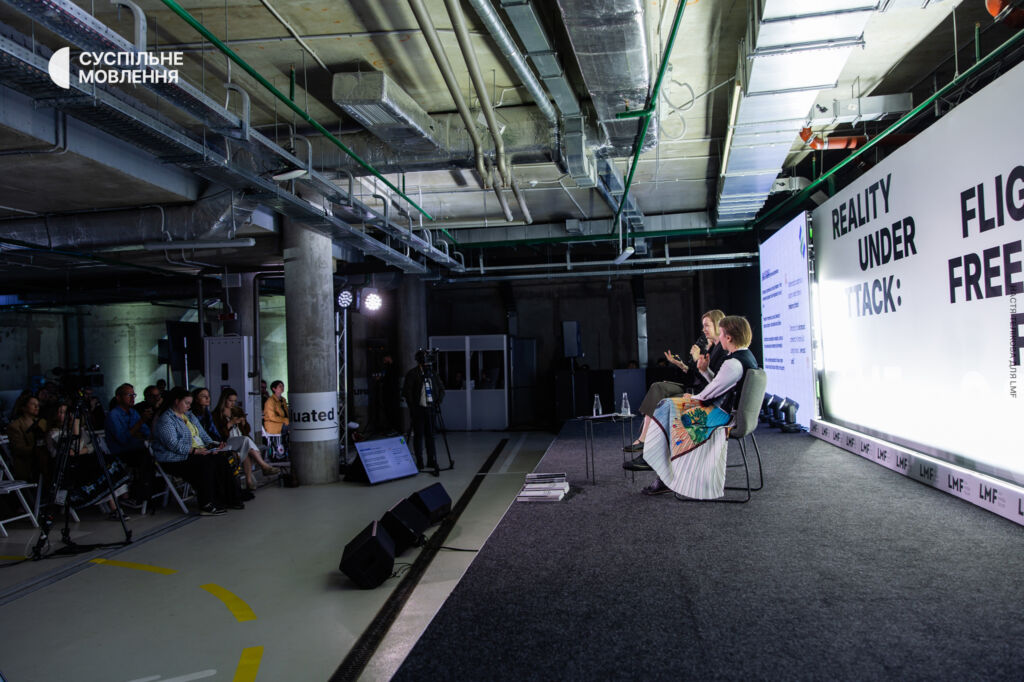
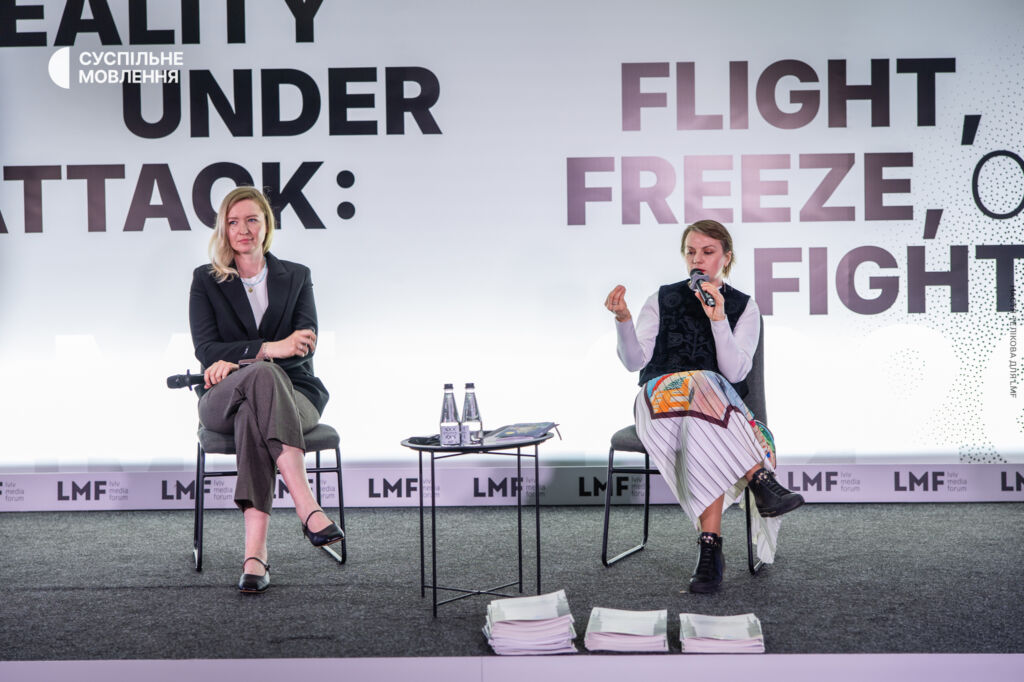
She also stressed that it is important for journalists not only to expose problems, but also to explain their essence to audiences.
“When we do investigations, are we really explaining what exactly constitutes a crime? Are we sufficiently explaining what is wrong in the actions of officials or people in power? Sometimes people genuinely need basic information to understand where the violation lies or how things actually work in reality,” said Angelina Kariakina.
She also drew attention to the tone of communication and the role of information presentation formats.
“Are we really speaking about things calmly enough so that people can trust our facts rather than our tone of voice or emotions? The way journalists present something truly affects how people perceive information. And many of these “small” details genuinely matter to audiences,” said Angelina Kariakina.
The Laboratory’s study “Ukraine Facing a Double Challenge” focuses on how Ukrainians define the boundaries of democracy during the full-scale war — between security and freedom of speech, necessary restrictions, and the risk of self-censorship. The team conducted online interviews and focus groups with military personnel, veterans, internally displaced people, civilians, people living near the frontline, and residents of different regions of Ukraine. The results are available here.
LMF is an international conference and platform for discussing media, journalism, communications, and social challenges, held annually in Lviv.
Suspilne Ukraine is an independent media company with a strong presence across all platforms: the TV channels Pershyi, Suspilne Kultura, Suspilne Sport, and a national network of local channels; the radio stations Ukrainske Radio, Radio Promin, Radio Kultura, Radiotochka. Find only verified news on suspilne.media, as well as on our national and local digital platforms. We broadcast in minority languages, represent Ukraine at the Eurovision Song Contest, develop the children’s platform Brobaks, and train media professionals through the Public Media Academy. Our Suspilne Mediateka platform offers unique video and audio archives dating from the 1920s to today. Defending freedom in Ukraine.
Photo by Nastia Telikova for LMF 2026