

Scroll Top
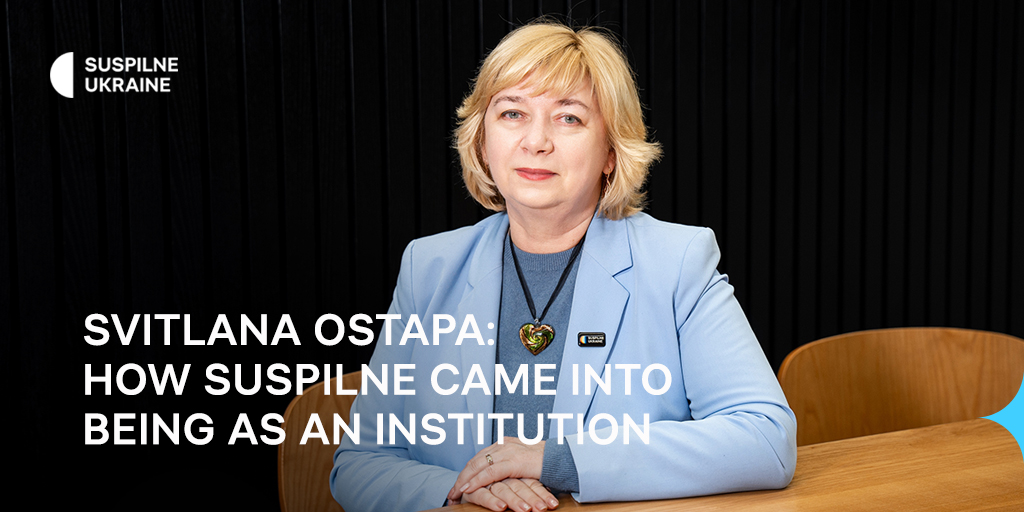
Svitlana Ostapa: How Suspilne came into being as an institution

Svitlana Ostapa: How Suspilne came into being as an institution

Поділитись

Svitlana Ostapa has been with Suspilne from the very beginning: from the first lineup of the supervisory board to the present day, when she is now serving her third term as chair of the board. If you ask her how much time she spends on Suspilne, she will smile and quietly reply, «A lot». She has believed in the idea of Suspilne Ukraine from the very beginning and has been with it every step of the way — from the approval of the charter to the establishment of the institution that it is today. She says that Suspilne is like a child for her. 

In this interview you will read about systemic changes and strategic directions for the media company’s development in the coming years, professional standards, defending independence, what she’s proud of, and what kind of content she watches on Suspilne’s platforms.

— You’ve been with Suspilne since the very first day of the reform—in fact, you were involved in preparing it. How do you remember 2017? Did you realize at the time the scale of the changes to come? 

— We were creating Suspilne when the war had already started, the law was passed in April 2014. We had to audit 30 big companies and bring them together in one. At that time the Donetsk and Luhansk branches were occupied, and the Crimean branch was annexed, making it impossible to conduct an audit of these companies. We consulted with various institutions, ministries, and agencies on how to do this within the framework of the law, so that the reform could not be reversed later. So, of course, I was aware of the scale of the task. 

However, the toughest situation was inside these companies — the vast majority of employees didn’t want to change anything. They didn’t understand the aim of «destroying» the state broadcasting and this reform was needed. We conducted many meetings to explain it. Some were convinced, others weren’t.

We did a lot to register this company, but even some members of the supervisory board did not believe that this would really happen. We understood that the authorities did not want to give up such a resource.

— Did you believe it?

— I really don’t know why but I believed it. I believed in it and did everything I could—for example, I pushed everyone at every level to get the charter approved by the end of 2016. Oleh Nalyvaiko, the head of State Committee for Television and Radio Broadcasting of Ukraine, helped a lot. He understood the meaning of this reform and supported it. The minister of information, Yuriy Stets, helped with the status of this reform. When on January 19, 2017 I received a text message from Oleh Nalyvaiko that the legal entity for PJSC “UA: PBC” was registered, I bought a bottle of champagne. It was like the birth of a child.

But then everything was just getting started. Everyone who was against this reform began demanding that we instantly become the BBC, but that was simply impossible. Those were unrealistic expectations right from the start.

— Did Suspilne draw on the BBC’s experience?

— We looked up to BBC journalists standards — it was these principles that formed the basis of the editorial charter. Before creating Suspilne Ukraine we were recording the news from state regional channels so that there would be something to compare it to later. It was nothing but sycophancy, praise for the authorities, and a complete lack of opposition. Now Suspilne Novyny is a leader in upholding professional standards, and people trust us. This is very important because news is the heart of any media outlet.  

We hold a prominent position in the European Broadcasting Union. Whereas we were once viewed as a new and inexperienced institution, today we are full-fledged partners. Board chairman Mykola Chernotitsky and other representatives of Suspilne serve on the EBU’s governing bodies. Suspilne is among the leaders in news distribution among European broadcasters. We have experience working during wartime that our European colleagues lack; now they come to us to learn from our operational protocols.

Yet, there is one thing that unites all public broadcasters: we do not work for the government or the opposition, nor for any investor or oligarch. We work for society — for totally different audiences including the ones that aren’t interesting for commercial broadcasting. For example, for those who appreciate classical music, even if there are several hundred thousand of them.
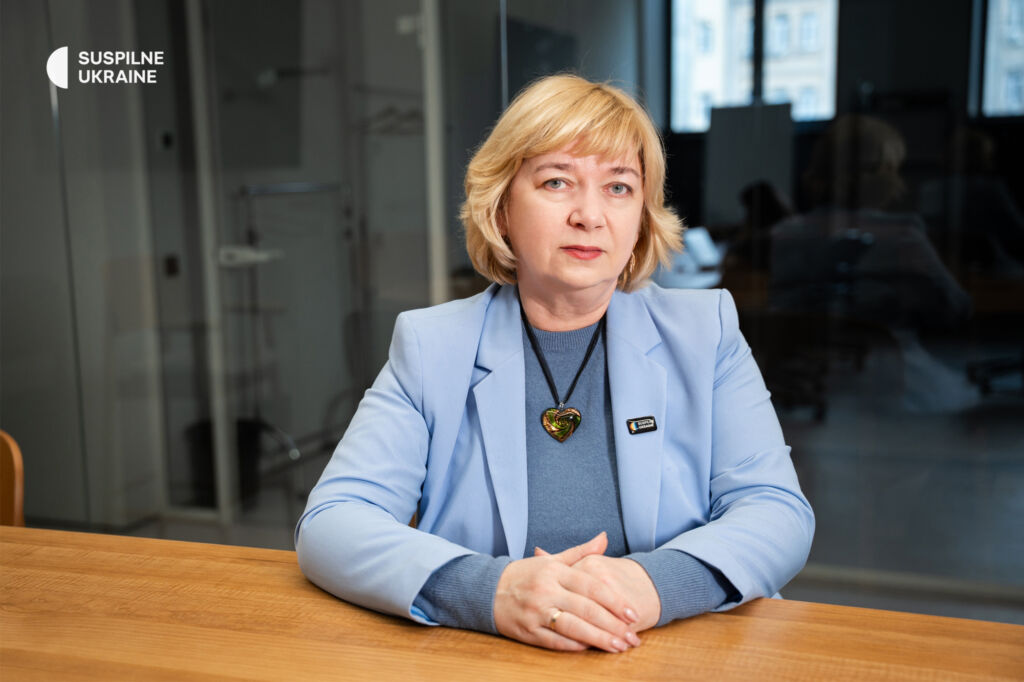
Svitlana Ostapa

— You told us about the high level of trust for the news. It’s clear that it will be high during times of war and crisis, and should decline thereafter, since these processes generally operate differently during periods of stability and security. Do you think this will be a problem for the team?

— That is true that today we really have an abnormally high level of trust for our news that is connected to the full-scale invasion. Once it’s over, it will start to decline, and that’s only natural. Right now people are tired of news, and there is a certain decline in interest in them. However, people who are safe now continue to consume news to protect themselves. 

— What major systemic changes have taken place at Suspilne over the past nine years? 

— The first change: the content has become much higher quality and more user-centric. Previously every regional company produced up to 50 projects for government contracts. That is a huge amount of content but it was mostly unreliable and often failed to attract an audience. Now we have less projects but they are top-notch. We conduct research to understand what people need and study our audience and their interests.

The second change is about people. In 2018 we shortened the amount of employees from 7 000 to 4 000.  The people working here now understand the value of Suspilne. There are a lot of young faces, especially in the news field. They grew up and developed under different circumstances and cannot even imagine working under censorship. During the telethon we were often asked about censorship and we explained that it is impossible on Suspilne: any attempt to interfere with editorial policy would be all over Facebook within two minutes.

Among important changes — the emergence and rapid development of digital technology. When Suspilne was first established, digital platforms didn’t even exist, but we understood that the younger audience was online—that they even listened to the radio online.

The first board chairman of Suspilne, Zurab Alasania, destroyed everything old and downtime, established a new company and  maintained its independence. When the second board chairman, Mykola Chernotytskyi, arrived he set the main direction — Digital First. That way we appeared in all social media, developed our website, and became visible. Millions of people read and watch us and no one will say anymore that Suspilne is just «UT-1». 

— What is your vision for the development of Suspilne in the regions?

— We have moved away from the idea that local television is essential in the regions and have shifted our focus to the development of digital platforms: news on the sites, messengers, social media and videos on YouTube that really get millions of views. Fifteen of Suspilne’s regional channels on YouTube have already received “Silver” awards. Important regional news broadcasts are aired nationwide on Pershyi TV Channel as part of our telethon. Documentaries are being filmed at our regional offices.

We really want people in the regions to work in decent conditions. Last year, with the help of Swedish SIDA a new office in Khmelnytskyi was opened. And it became an example for other branches. 
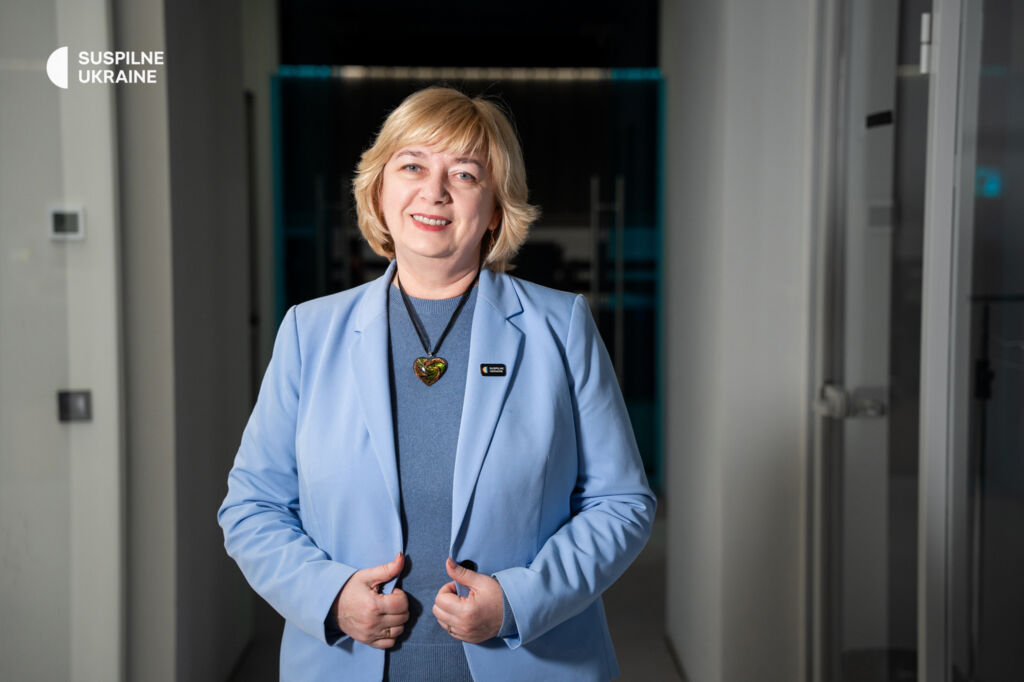
Svitlana Ostapa

— What is the development strategy for Suspilne Ukraine for the next few years?

— Back in 2017, the supervisory board outlined the main areas that needed to be developed: news broadcasting, regional programming, children’s programming, sports programming, programming for national communities, and so on. Therefore, for each of them we developed and approved concepts.  The Council of Europe provided us with support in this regard. Last year the supervisory board passed a strategic document «Key Areas of Activity for 2026–2030» that describes our priorities for the next five years. 

News broadcasting and the production of documentary projects will always be among our top priorities. This is relevant both now, while we are still at war, and after the war. We will serve as a platform for fostering dialogue among different groups.

We have received requests, including from members of parliament, to increase Ukrainian-language content for Ukrainians abroad who left following the full-scale invasion but need reliable information. This year, we plan to develop a strategy that will define content priorities, communication channels, and formats for engaging this audience.

One more important direction for us for the next few years is the development of the youth concept. When we worked on the concept for children and teens, we understood that it can’t be mixed with youth. That is a different audience with different needs.

— How much time do you devote to Suspile?

— A lot (laughing).

— So that is your full-time job?

— Of course. For many years now. And work that still is not paid. 

Is there any sign of when the situation will change?

— Current legislation provides for the possibility of reimbursement for time spent on this work after the end of martial law. However, the amount in question is significantly lower than what our colleagues on other supervisory boards of joint-stock companies receive. The relevant changes were adopted back in December 2022. Since then, the second term of the supervisory board has ended, its members have still not received compensation, and the third term has already begun. 

There is a bill that proposes removing this restriction, but it has not been passed for over a year and a half. It is part of the European integration legislative package in the context of Ukraine’s future accession to the EU.

That seems like voluntary work. What inspires you?

— The appearance of Suspilne Ukraine is one of the most successful reforms after the Revolution of Dignity. I am inspired by the results of the work and by the understanding that I do that for my children. Suspilne is like a child to me, but as a Head of the supervisory board I have never turned a blind eye to problems. 

— That is your personal decision and perspective. But what makes the entire board of directors work effectively?

— The vast majority of supervisory board members are united by democratic values, and they understand the importance of this reform. Due to that we are able to work effectively.

I remember when the first supervisory board was formed; we were assigned the former office of the head of Ukrainske Radio. It had a very Soviet feel to it: chairs upholstered in red velvet, wood paneling, and old furniture. Nowadays this space is very modern. A supervisory board office has also been established, and the company has appointed a corporate secretary — Kateryna Polyvach — who is helping to streamline corporate governance processes.

In general, corporate culture does not change that fast. That is easy to change sign but it is way more complicated to rebuild inner processes from the government model to corporate management. However, this process is still going on: members of the supervisory board and the executive board are learning, and everyone is gradually getting used to it.

— We often talk about Suspilne as a reform. Can we consider that the reform is now complete and that Suspilne has established itself as an institution?

— The reform is still ongoing, and there are certain transformative changes that cannot be implemented quickly. For example, there is the issue of property that we don’t need but are still paying to maintain.

As an institution Suspilne has established. I am certain about it. Now we need to change this institution and protect its independence. 

— Is there a need to defend its independence the same way as nine years ago? And will we always have to do this?

— Yes, there is such a need. It is often connected with the misunderstanding of journalism’s role. In a Soviet tradition, journalists were treated like servants: they did what they were told to. That’s how it is in russia right now. 

I have a representative story from back when there was state television. During the opening of a monument in Kyiv, the channel received a call demanding that they send a camera. When they were told that all the cameras were already at other events and only a broken one remained, the response was: “Send the broken one at least, so the mayor can see that a camera is there.” In other words, what mattered wasn’t what was being filmed, but the mere fact that a camera was present.

Suspilne Ukraine works differently. Journalists and editors decide by themselves which topics are important for the audience. They do not work on someone’s behalf anymore. That is why some politicians get offended: someone by pointed questions, someone by a rare invitation for the broadcast. We try to explain our work principles calmly. I would like to take this opportunity to acknowledge the constructive cooperation we have enjoyed with the parliamentary committees on humanitarian and information policy and on freedom of speech, which have always supported us.

I should note that even public broadcasters with a long history are not immune to pressure. This pressure can come from influential figures, politicians, or financial decisions. We see similar processes happening around the world today—particularly in the U.S., where the very model of public broadcasting is now being called into question. Therefore, the issue of independence is not something that is settled once and for all. It is an ongoing process and a constant struggle for the right to operate in accordance with journalistic standards.

— What is the current situation regarding funding for Suspilne?

— In nine years, Suspilne has never received the full amount of funding required by law — 0.2 percent of the state budget. The best situation was in 2021 — at that time, the budget amounted to about 85% of what was due. It was then that we were able for the first time to allocate capital expenditures and purchase some of the necessary equipment. This helped greatly at the start of the full-scale invasion — we turned out to be better prepared to work under crisis conditions.

Funding has also been increasing slightly over the past two years. This is partly due to the purchase of broadcasting rights for major sporting events, such as the Olympics.

We understand that during wartime, the state budget is primarily directed toward defense, so we do not insist on full funding. If we formally apply the legal requirement—0.2% of state budget expenditures—then this year Suspilne should have received over 6 billion hryvnias. This is a very large sum: for comparison, last year slightly more than 10 billion hryvnias were allocated for the entire cultural sector in Ukraine. Therefore, excluding military expenditures, Suspilne’s realistic funding need would be approximately 3 billion hryvnias. In reality, however, the budget amounts to about 2.45 billion.
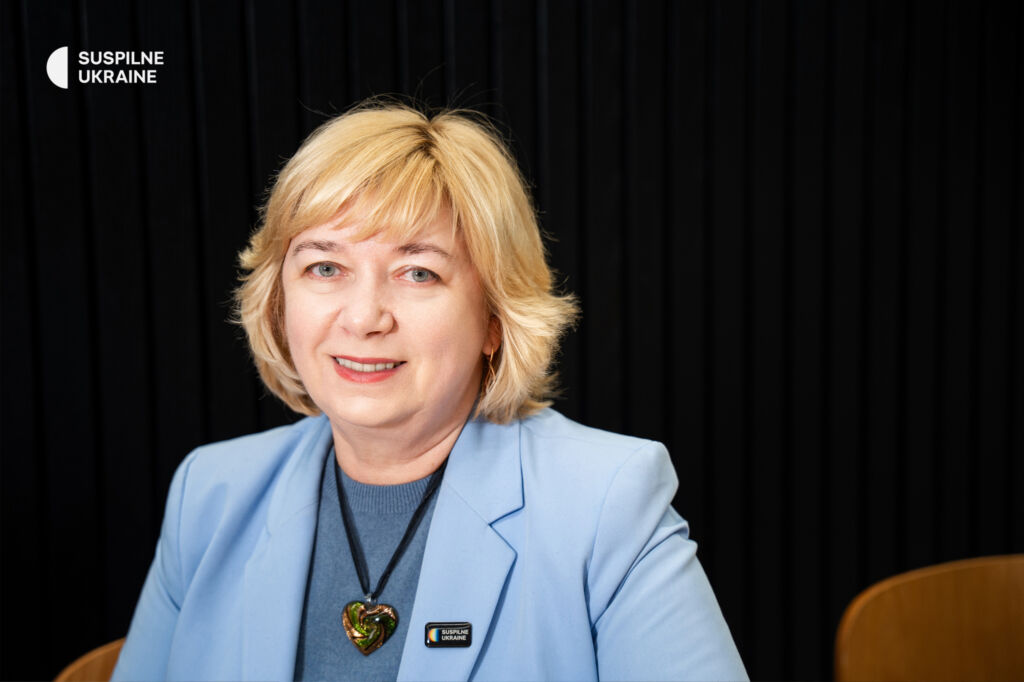
Svitlana Ostapa

— What Suspilne content do you consume every day? 

— Every day I read the news feeds on Telegram channels: not just Suspilne Novyny, but also those of regional branches, especially in the regions where my relatives live. Whenever I see a report about shelling, I always click on it to check the details. I also listen to Ukrainske Radio and watch our videos on social media.

Last week we were on a business trip to Zaporizhzhia and spoke with our colleagues. I was struck by their calmness. During air raid alerts, they respond with great composure and without panic — people who live with this threat every day perceive it differently. Then I come home and read that Zaporizhzhia has been shelled again. It hurts so much, it feels like everything inside is tightening up. You worry not only for your colleagues, but for everyone who lives there. I feel the same way about Kharkiv, Kherson, Sumy, Odesa…

There is another change: before the full-scale war and before the creation of Suspilne, these now-defunct state-run channels had no war correspondents. Now there are war correspondents both at the central office and at every border branch. The people there simply live their lives—and are forced to become war correspondents.

— What are your favorite films of Suspilne? 

— We have incredible documentary films that restore historical justice. This is a source of particular pride for me. There is demand for them both domestically and abroad. They are subtitled in English and screened at various events. I receive a great deal of feedback from people—including diplomats—praising their high quality.

I watched almost all our films and I liked a lot of them. I truly enjoyed projects of Myroslava Barchuk and Oleksandr Zinchenko like film «Schedryk vs “russian world”», «Battle for Chernihiv», «Military Chaplains. Faith at War» and more. A lot of our projects and films are created due to donorship. 

Overall, we are deeply grateful to international institutions and donors from various countries for their trust in us and their support. The EU understands the importance of independent public broadcasting for Ukraine. 

Suspilne Ukraine is an independent media company with a strong presence across all platforms: the TV channels PershyiSuspilne KulturaSuspilne Sport, and a national network of local channels; the radio stations Ukrainske Radio, Radio Promin, Radio Kultura, Radiotochka. Find only verified news on suspilne.media, as well as on our national and local digital platforms. We broadcast in minority languages, represent Ukraine at the Eurovision Song Contest, develop the children’s platform Brobaks, and train media professionals through the Public Media Academy. Our Suspilne Mediateka platform offers unique video and audio archives dating from the 1920s to today. Defending freedom in Ukraine. 

Photographed by Anastasiia Mantach
Поділитись
Svitlana Ostapa: How Suspilne came into being as an institution

Svitlana Ostapa: How Suspilne came into being as an institution

Поділитись

Svitlana Ostapa has been with Suspilne from the very beginning: from the first lineup of the supervisory board to the present day, when she is now serving her third term as chair of the board. If you ask her how much time she spends on Suspilne, she will smile and quietly reply, «A lot». She has believed in the idea of Suspilne Ukraine from the very beginning and has been with it every step of the way — from the approval of the charter to the establishment of the institution that it is today. She says that Suspilne is like a child for her. 

In this interview you will read about systemic changes and strategic directions for the media company’s development in the coming years, professional standards, defending independence, what she’s proud of, and what kind of content she watches on Suspilne’s platforms.

— You’ve been with Suspilne since the very first day of the reform—in fact, you were involved in preparing it. How do you remember 2017? Did you realize at the time the scale of the changes to come? 

— We were creating Suspilne when the war had already started, the law was passed in April 2014. We had to audit 30 big companies and bring them together in one. At that time the Donetsk and Luhansk branches were occupied, and the Crimean branch was annexed, making it impossible to conduct an audit of these companies. We consulted with various institutions, ministries, and agencies on how to do this within the framework of the law, so that the reform could not be reversed later. So, of course, I was aware of the scale of the task. 

However, the toughest situation was inside these companies — the vast majority of employees didn’t want to change anything. They didn’t understand the aim of «destroying» the state broadcasting and this reform was needed. We conducted many meetings to explain it. Some were convinced, others weren’t.

We did a lot to register this company, but even some members of the supervisory board did not believe that this would really happen. We understood that the authorities did not want to give up such a resource.

— Did you believe it?

— I really don’t know why but I believed it. I believed in it and did everything I could—for example, I pushed everyone at every level to get the charter approved by the end of 2016. Oleh Nalyvaiko, the head of State Committee for Television and Radio Broadcasting of Ukraine, helped a lot. He understood the meaning of this reform and supported it. The minister of information, Yuriy Stets, helped with the status of this reform. When on January 19, 2017 I received a text message from Oleh Nalyvaiko that the legal entity for PJSC “UA: PBC” was registered, I bought a bottle of champagne. It was like the birth of a child.

But then everything was just getting started. Everyone who was against this reform began demanding that we instantly become the BBC, but that was simply impossible. Those were unrealistic expectations right from the start.

— Did Suspilne draw on the BBC’s experience?

— We looked up to BBC journalists standards — it was these principles that formed the basis of the editorial charter. Before creating Suspilne Ukraine we were recording the news from state regional channels so that there would be something to compare it to later. It was nothing but sycophancy, praise for the authorities, and a complete lack of opposition. Now Suspilne Novyny is a leader in upholding professional standards, and people trust us. This is very important because news is the heart of any media outlet.  

We hold a prominent position in the European Broadcasting Union. Whereas we were once viewed as a new and inexperienced institution, today we are full-fledged partners. Board chairman Mykola Chernotitsky and other representatives of Suspilne serve on the EBU’s governing bodies. Suspilne is among the leaders in news distribution among European broadcasters. We have experience working during wartime that our European colleagues lack; now they come to us to learn from our operational protocols.

Yet, there is one thing that unites all public broadcasters: we do not work for the government or the opposition, nor for any investor or oligarch. We work for society — for totally different audiences including the ones that aren’t interesting for commercial broadcasting. For example, for those who appreciate classical music, even if there are several hundred thousand of them.

Svitlana Ostapa

— You told us about the high level of trust for the news. It’s clear that it will be high during times of war and crisis, and should decline thereafter, since these processes generally operate differently during periods of stability and security. Do you think this will be a problem for the team?

— That is true that today we really have an abnormally high level of trust for our news that is connected to the full-scale invasion. Once it’s over, it will start to decline, and that’s only natural. Right now people are tired of news, and there is a certain decline in interest in them. However, people who are safe now continue to consume news to protect themselves. 

— What major systemic changes have taken place at Suspilne over the past nine years? 

— The first change: the content has become much higher quality and more user-centric. Previously every regional company produced up to 50 projects for government contracts. That is a huge amount of content but it was mostly unreliable and often failed to attract an audience. Now we have less projects but they are top-notch. We conduct research to understand what people need and study our audience and their interests.

The second change is about people. In 2018 we shortened the amount of employees from 7 000 to 4 000.  The people working here now understand the value of Suspilne. There are a lot of young faces, especially in the news field. They grew up and developed under different circumstances and cannot even imagine working under censorship. During the telethon we were often asked about censorship and we explained that it is impossible on Suspilne: any attempt to interfere with editorial policy would be all over Facebook within two minutes.

Among important changes — the emergence and rapid development of digital technology. When Suspilne was first established, digital platforms didn’t even exist, but we understood that the younger audience was online—that they even listened to the radio online.

The first board chairman of Suspilne, Zurab Alasania, destroyed everything old and downtime, established a new company and  maintained its independence. When the second board chairman, Mykola Chernotytskyi, arrived he set the main direction — Digital First. That way we appeared in all social media, developed our website, and became visible. Millions of people read and watch us and no one will say anymore that Suspilne is just «UT-1». 

— What is your vision for the development of Suspilne in the regions?

— We have moved away from the idea that local television is essential in the regions and have shifted our focus to the development of digital platforms: news on the sites, messengers, social media and videos on YouTube that really get millions of views. Fifteen of Suspilne’s regional channels on YouTube have already received “Silver” awards. Important regional news broadcasts are aired nationwide on Pershyi TV Channel as part of our telethon. Documentaries are being filmed at our regional offices.

We really want people in the regions to work in decent conditions. Last year, with the help of Swedish SIDA a new office in Khmelnytskyi was opened. And it became an example for other branches. 

Svitlana Ostapa

— What is the development strategy for Suspilne Ukraine for the next few years?

— Back in 2017, the supervisory board outlined the main areas that needed to be developed: news broadcasting, regional programming, children’s programming, sports programming, programming for national communities, and so on. Therefore, for each of them we developed and approved concepts.  The Council of Europe provided us with support in this regard. Last year the supervisory board passed a strategic document «Key Areas of Activity for 2026–2030» that describes our priorities for the next five years. 

News broadcasting and the production of documentary projects will always be among our top priorities. This is relevant both now, while we are still at war, and after the war. We will serve as a platform for fostering dialogue among different groups.

We have received requests, including from members of parliament, to increase Ukrainian-language content for Ukrainians abroad who left following the full-scale invasion but need reliable information. This year, we plan to develop a strategy that will define content priorities, communication channels, and formats for engaging this audience.

One more important direction for us for the next few years is the development of the youth concept. When we worked on the concept for children and teens, we understood that it can’t be mixed with youth. That is a different audience with different needs.

— How much time do you devote to Suspile?

— A lot (laughing).

— So that is your full-time job?

— Of course. For many years now. And work that still is not paid. 

Is there any sign of when the situation will change?

— Current legislation provides for the possibility of reimbursement for time spent on this work after the end of martial law. However, the amount in question is significantly lower than what our colleagues on other supervisory boards of joint-stock companies receive. The relevant changes were adopted back in December 2022. Since then, the second term of the supervisory board has ended, its members have still not received compensation, and the third term has already begun. 

There is a bill that proposes removing this restriction, but it has not been passed for over a year and a half. It is part of the European integration legislative package in the context of Ukraine’s future accession to the EU.

That seems like voluntary work. What inspires you?

— The appearance of Suspilne Ukraine is one of the most successful reforms after the Revolution of Dignity. I am inspired by the results of the work and by the understanding that I do that for my children. Suspilne is like a child to me, but as a Head of the supervisory board I have never turned a blind eye to problems. 

— That is your personal decision and perspective. But what makes the entire board of directors work effectively?

— The vast majority of supervisory board members are united by democratic values, and they understand the importance of this reform. Due to that we are able to work effectively.

I remember when the first supervisory board was formed; we were assigned the former office of the head of Ukrainske Radio. It had a very Soviet feel to it: chairs upholstered in red velvet, wood paneling, and old furniture. Nowadays this space is very modern. A supervisory board office has also been established, and the company has appointed a corporate secretary — Kateryna Polyvach — who is helping to streamline corporate governance processes.

In general, corporate culture does not change that fast. That is easy to change sign but it is way more complicated to rebuild inner processes from the government model to corporate management. However, this process is still going on: members of the supervisory board and the executive board are learning, and everyone is gradually getting used to it.

— We often talk about Suspilne as a reform. Can we consider that the reform is now complete and that Suspilne has established itself as an institution?

— The reform is still ongoing, and there are certain transformative changes that cannot be implemented quickly. For example, there is the issue of property that we don’t need but are still paying to maintain.

As an institution Suspilne has established. I am certain about it. Now we need to change this institution and protect its independence. 

— Is there a need to defend its independence the same way as nine years ago? And will we always have to do this?

— Yes, there is such a need. It is often connected with the misunderstanding of journalism’s role. In a Soviet tradition, journalists were treated like servants: they did what they were told to. That’s how it is in russia right now. 

I have a representative story from back when there was state television. During the opening of a monument in Kyiv, the channel received a call demanding that they send a camera. When they were told that all the cameras were already at other events and only a broken one remained, the response was: “Send the broken one at least, so the mayor can see that a camera is there.” In other words, what mattered wasn’t what was being filmed, but the mere fact that a camera was present.

Suspilne Ukraine works differently. Journalists and editors decide by themselves which topics are important for the audience. They do not work on someone’s behalf anymore. That is why some politicians get offended: someone by pointed questions, someone by a rare invitation for the broadcast. We try to explain our work principles calmly. I would like to take this opportunity to acknowledge the constructive cooperation we have enjoyed with the parliamentary committees on humanitarian and information policy and on freedom of speech, which have always supported us.

I should note that even public broadcasters with a long history are not immune to pressure. This pressure can come from influential figures, politicians, or financial decisions. We see similar processes happening around the world today—particularly in the U.S., where the very model of public broadcasting is now being called into question. Therefore, the issue of independence is not something that is settled once and for all. It is an ongoing process and a constant struggle for the right to operate in accordance with journalistic standards.

— What is the current situation regarding funding for Suspilne?

— In nine years, Suspilne has never received the full amount of funding required by law — 0.2 percent of the state budget. The best situation was in 2021 — at that time, the budget amounted to about 85% of what was due. It was then that we were able for the first time to allocate capital expenditures and purchase some of the necessary equipment. This helped greatly at the start of the full-scale invasion — we turned out to be better prepared to work under crisis conditions.

Funding has also been increasing slightly over the past two years. This is partly due to the purchase of broadcasting rights for major sporting events, such as the Olympics.

We understand that during wartime, the state budget is primarily directed toward defense, so we do not insist on full funding. If we formally apply the legal requirement—0.2% of state budget expenditures—then this year Suspilne should have received over 6 billion hryvnias. This is a very large sum: for comparison, last year slightly more than 10 billion hryvnias were allocated for the entire cultural sector in Ukraine. Therefore, excluding military expenditures, Suspilne’s realistic funding need would be approximately 3 billion hryvnias. In reality, however, the budget amounts to about 2.45 billion.

Svitlana Ostapa

— What Suspilne content do you consume every day? 

— Every day I read the news feeds on Telegram channels: not just Suspilne Novyny, but also those of regional branches, especially in the regions where my relatives live. Whenever I see a report about shelling, I always click on it to check the details. I also listen to Ukrainske Radio and watch our videos on social media.

Last week we were on a business trip to Zaporizhzhia and spoke with our colleagues. I was struck by their calmness. During air raid alerts, they respond with great composure and without panic — people who live with this threat every day perceive it differently. Then I come home and read that Zaporizhzhia has been shelled again. It hurts so much, it feels like everything inside is tightening up. You worry not only for your colleagues, but for everyone who lives there. I feel the same way about Kharkiv, Kherson, Sumy, Odesa…

There is another change: before the full-scale war and before the creation of Suspilne, these now-defunct state-run channels had no war correspondents. Now there are war correspondents both at the central office and at every border branch. The people there simply live their lives—and are forced to become war correspondents.

— What are your favorite films of Suspilne? 

— We have incredible documentary films that restore historical justice. This is a source of particular pride for me. There is demand for them both domestically and abroad. They are subtitled in English and screened at various events. I receive a great deal of feedback from people—including diplomats—praising their high quality.

I watched almost all our films and I liked a lot of them. I truly enjoyed projects of Myroslava Barchuk and Oleksandr Zinchenko like film «Schedryk vs “russian world”», «Battle for Chernihiv», «Military Chaplains. Faith at War» and more. A lot of our projects and films are created due to donorship. 

Overall, we are deeply grateful to international institutions and donors from various countries for their trust in us and their support. The EU understands the importance of independent public broadcasting for Ukraine. 

Suspilne Ukraine is an independent media company with a strong presence across all platforms: the TV channels PershyiSuspilne KulturaSuspilne Sport, and a national network of local channels; the radio stations Ukrainske Radio, Radio Promin, Radio Kultura, Radiotochka. Find only verified news on suspilne.media, as well as on our national and local digital platforms. We broadcast in minority languages, represent Ukraine at the Eurovision Song Contest, develop the children’s platform Brobaks, and train media professionals through the Public Media Academy. Our Suspilne Mediateka platform offers unique video and audio archives dating from the 1920s to today. Defending freedom in Ukraine. 

Photographed by Anastasiia Mantach
Поділитись
Privacy Preferences
When you visit our website, it may store information through your browser from specific services, usually in form of cookies. Here you can change your privacy preferences. Please note that blocking some types of cookies may impact your experience on our website and the services we offer.