Skip to main content Scroll Top
  • Home
  • News
  • Top Stories
  • Suspilne Ukraine’s experience included in a handbook on information environment resilience in times of crisis
Suspilne Ukraine’s experience included in a handbook on information environment resilience in times of crisis

Suspilne Ukraine’s experience included in a handbook on information environment resilience in times of crisis

Поділитись

Suspilne Ukraine’s experience of working during the full-scale war has been included in the handbook “Information Environment Resilience in Times of Crisis: Recommendations for Key Stakeholders,” prepared within the MERIT Forum with the support of International Media Support (IMS) and presented in Kyiv on 22 January.

Mariya Frey, Member of the Managing Board of Suspilne Ukraine responsible for News and Regional Content, contributed to the development of the handbook. She presented Suspilne’s approach to ensuring uninterrupted broadcasting, maintaining editorial standards, and preserving audience trust amid constant security and information challenges.

“This handbook systematises practical decisions made by media organisations and institutions during a prolonged war and turns them into applied recommendations for those who have not yet fully realised the scale of the threats and are looking at the Ukrainian experience with interest. It primarily focuses on governance and ethical frameworks that allow systems to operate under extreme pressure, as well as examples of stakeholder cooperation,” says Mariya Frey, Member of the Managing Board of Suspilne Ukraine responsible for News and Regional Content.

“The situation faced by Ukrainian media is unprecedented in terms of the scale of challenges. At the same time, it is unique because all rules and recommendations are developed not in theory but through real-time practice and tested on the ground. We know exactly what works, where the main risks lie, and what requires attention. Protecting democratic values, countering information warfare, and working under constant pressure and threat to life is our daily reality. That is why we are ready to share this experience with colleagues from other countries, demonstrating the most effective practices. I hope our recommendations will be useful for media worldwide and help them better understand threats and respond effectively,” adds Anastasiia Ravva, General Producer of Espreso, who also joined the project’s media expert group.

Participants of the MERIT Forum during the presentation of the handbook “Information Environment Resilience in Times of Crisis.” Kyiv, 22 January 2026

Participants of the MERIT Forum during the presentation of the handbook “Information Environment Resilience in Times of Crisis.” Kyiv, 22 January 2026

The handbook outlines the role of key stakeholders who influenced the resilience of Ukraine’s information environment before, during, and after the full-scale invasion. The authors identified core crisis signals and approaches to timely response. The handbook has already been presented at international and professional platforms and is planned to be translated into English and made publicly available.

From the civil society sector, media expert and StopFake co-founder Olha Yurkova and media lawyer Maksym Dvorovyi, Head of Digital Rights at the NGO Digital Security Lab, contributed to the development of the handbook.

“Ukrainian civil society organisations working in the information sphere have demonstrated strong resilience both at the beginning of and throughout the full-scale invasion. Their experience of preparation, risk assessment, rapid reassessment of work, and the search for new strategic directions during uncertainty is worth studying by colleagues who have not yet faced similar challenges. Equally valuable is the experience of civil society consolidation against wartime information threats. Ukrainian organisations have shown that it is possible to act as watchdogs while cooperating with the state to protect the information space from malicious influence,” said Olha Yurkova.

“Ukraine has travelled a long path — from criticism by international colleagues of its approaches to countering hostile narratives to those same approaches being replicated abroad. The practices developed here through trial and error since 2014 can serve as illustrative examples for other countries facing similar threats of authoritarian dominance in the information space. Democracy must defend itself, and Ukraine has demonstrated how this can be done without excessive restrictions on freedom of expression,” said Maksym Dvorovyi.

From the Institute of Journalism of Taras Shevchenko National University of Kyiv, Andrii Bystrov, a PhD student at the Department of Online Media, and Liudmyla Fedorchuk, Associate Professor at the Department of Audiovisual Media, joined the expert group.

“Ukrainian universities have already taken a path that most European academies are only theoretically preparing for. For Europeans, our experience is a unique dataset on how to maintain educational resilience during a large-scale war. Ukrainian adaptive strategies today are highly relevant and essentially provide a roadmap that educational institutions in Poland and the Baltic states could start implementing now,” emphasised Andrii Bystrov.

“I don’t know whether European colleagues are ready to teach without electricity and heating between daily air-raid alarms. I don’t know whether European students could study asynchronously and gain not only theoretical knowledge but also regular practical skills under such conditions of alarms and blackouts. But I do know that Ukrainian students truly value our efforts and strive to enter the profession as well prepared as possible,” said Liudmyla Fedorchuk.

Representatives of state institutions in the project included Maksym Onopriienko, Member of the National Council of Ukraine on Television and Radio Broadcasting, and Yaroslav Yurchyshyn, Chair of the Verkhovna Rada Committee on Freedom of Speech.

“The Ukrainian experience was formed in conditions where the cost of mistakes is extremely high, but these lessons will help other countries prepare in advance. This handbook is essentially an action plan for the periods before, during, and partly after the full-scale war. It brings together practical approaches to recognising information threats early, maintaining resilience in the first days of a crisis, and preserving ethical standards within the media system. Our experience is painful, but it should be taken into account so that others do not face the same challenges,” noted Maksym Onopriienko.

“Unpunished evil returns stronger. Experience that is not understood never truly becomes experience. To prevent the former and avoid repeating the tragedy of 2022 due to a lack of awareness, we must reflect on and understand the events of the early days of the full-scale invasion right now, while they are still unfolding. Thanks to IMS and the MERIT Forum, we have this opportunity. Now it is important to use it and enable our international partners to learn from our mistakes rather than repeat them. Prepared means armed,” said Yaroslav Yurchyshyn.

Roman Kifliuk, IMS National Advisor for Ukraine, noted that the MERIT Forum is part of the IMS REACH Eastern Partnership programme — “Media Partnerships for Accountability and Trust,” funded by the Ministry of Foreign Affairs of Denmark.

“In March 2025, Kyiv hosted the launch of the first year of the MERIT Forum, which brings together key media law experts from different sectors in Ukraine to develop impact projects supporting a favourable legislative environment. MERIT provides an opportunity for experts to improve their knowledge of Ukrainian and EU legislation, create advocacy projects that support a healthy media environment, and protect democracy and human rights. The programme includes at least eight expert meetings in Ukraine, professional visits to Brussels and Copenhagen, and the development and implementation of an impact project,” said Roman Kifliuk.

Suspilne Ukraine is an independent media company with a strong presence across all platforms: the TV channels Pershyi, Suspilne Kultura, Suspilne Sport, and a national network of local channels; the radio stations Ukrainske Radio, Radio Promin, Radio Kultura, Radiotochka. Find only verified news on suspilne.media, as well as on our national and local digital platforms. We broadcast in minority languages, represent Ukraine at the Eurovision Song Contest, develop the children’s platform Brobaks, and train media professionals through the Public Media Academy. Our Suspilne Mediateka platform offers unique video and audio archives dating from the 1920s to today. Defending freedom in Ukraine. 

Photo: Nastia Telikova

Поділитись
Suspilne Ukraine’s experience included in a handbook on information environment resilience in times of crisis

Suspilne Ukraine’s experience included in a handbook on information environment resilience in times of crisis

Поділитись

Suspilne Ukraine’s experience of working during the full-scale war has been included in the handbook “Information Environment Resilience in Times of Crisis: Recommendations for Key Stakeholders,” prepared within the MERIT Forum with the support of International Media Support (IMS) and presented in Kyiv on 22 January.

Mariya Frey, Member of the Managing Board of Suspilne Ukraine responsible for News and Regional Content, contributed to the development of the handbook. She presented Suspilne’s approach to ensuring uninterrupted broadcasting, maintaining editorial standards, and preserving audience trust amid constant security and information challenges.

“This handbook systematises practical decisions made by media organisations and institutions during a prolonged war and turns them into applied recommendations for those who have not yet fully realised the scale of the threats and are looking at the Ukrainian experience with interest. It primarily focuses on governance and ethical frameworks that allow systems to operate under extreme pressure, as well as examples of stakeholder cooperation,” says Mariya Frey, Member of the Managing Board of Suspilne Ukraine responsible for News and Regional Content.

“The situation faced by Ukrainian media is unprecedented in terms of the scale of challenges. At the same time, it is unique because all rules and recommendations are developed not in theory but through real-time practice and tested on the ground. We know exactly what works, where the main risks lie, and what requires attention. Protecting democratic values, countering information warfare, and working under constant pressure and threat to life is our daily reality. That is why we are ready to share this experience with colleagues from other countries, demonstrating the most effective practices. I hope our recommendations will be useful for media worldwide and help them better understand threats and respond effectively,” adds Anastasiia Ravva, General Producer of Espreso, who also joined the project’s media expert group.

Participants of the MERIT Forum during the presentation of the handbook “Information Environment Resilience in Times of Crisis.” Kyiv, 22 January 2026
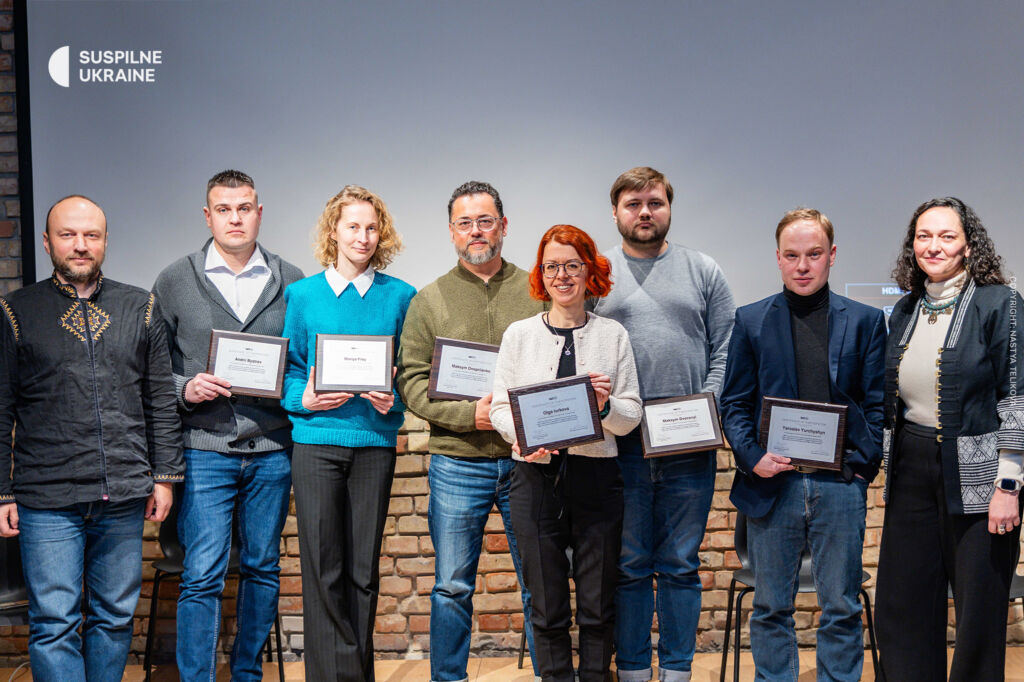
Participants of the MERIT Forum during the presentation of the handbook “Information Environment Resilience in Times of Crisis.” Kyiv, 22 January 2026

The handbook outlines the role of key stakeholders who influenced the resilience of Ukraine’s information environment before, during, and after the full-scale invasion. The authors identified core crisis signals and approaches to timely response. The handbook has already been presented at international and professional platforms and is planned to be translated into English and made publicly available.

From the civil society sector, media expert and StopFake co-founder Olha Yurkova and media lawyer Maksym Dvorovyi, Head of Digital Rights at the NGO Digital Security Lab, contributed to the development of the handbook.

“Ukrainian civil society organisations working in the information sphere have demonstrated strong resilience both at the beginning of and throughout the full-scale invasion. Their experience of preparation, risk assessment, rapid reassessment of work, and the search for new strategic directions during uncertainty is worth studying by colleagues who have not yet faced similar challenges. Equally valuable is the experience of civil society consolidation against wartime information threats. Ukrainian organisations have shown that it is possible to act as watchdogs while cooperating with the state to protect the information space from malicious influence,” said Olha Yurkova.

“Ukraine has travelled a long path — from criticism by international colleagues of its approaches to countering hostile narratives to those same approaches being replicated abroad. The practices developed here through trial and error since 2014 can serve as illustrative examples for other countries facing similar threats of authoritarian dominance in the information space. Democracy must defend itself, and Ukraine has demonstrated how this can be done without excessive restrictions on freedom of expression,” said Maksym Dvorovyi.

From the Institute of Journalism of Taras Shevchenko National University of Kyiv, Andrii Bystrov, a PhD student at the Department of Online Media, and Liudmyla Fedorchuk, Associate Professor at the Department of Audiovisual Media, joined the expert group.

“Ukrainian universities have already taken a path that most European academies are only theoretically preparing for. For Europeans, our experience is a unique dataset on how to maintain educational resilience during a large-scale war. Ukrainian adaptive strategies today are highly relevant and essentially provide a roadmap that educational institutions in Poland and the Baltic states could start implementing now,” emphasised Andrii Bystrov.

“I don’t know whether European colleagues are ready to teach without electricity and heating between daily air-raid alarms. I don’t know whether European students could study asynchronously and gain not only theoretical knowledge but also regular practical skills under such conditions of alarms and blackouts. But I do know that Ukrainian students truly value our efforts and strive to enter the profession as well prepared as possible,” said Liudmyla Fedorchuk.

Representatives of state institutions in the project included Maksym Onopriienko, Member of the National Council of Ukraine on Television and Radio Broadcasting, and Yaroslav Yurchyshyn, Chair of the Verkhovna Rada Committee on Freedom of Speech.

“The Ukrainian experience was formed in conditions where the cost of mistakes is extremely high, but these lessons will help other countries prepare in advance. This handbook is essentially an action plan for the periods before, during, and partly after the full-scale war. It brings together practical approaches to recognising information threats early, maintaining resilience in the first days of a crisis, and preserving ethical standards within the media system. Our experience is painful, but it should be taken into account so that others do not face the same challenges,” noted Maksym Onopriienko.

“Unpunished evil returns stronger. Experience that is not understood never truly becomes experience. To prevent the former and avoid repeating the tragedy of 2022 due to a lack of awareness, we must reflect on and understand the events of the early days of the full-scale invasion right now, while they are still unfolding. Thanks to IMS and the MERIT Forum, we have this opportunity. Now it is important to use it and enable our international partners to learn from our mistakes rather than repeat them. Prepared means armed,” said Yaroslav Yurchyshyn.

Roman Kifliuk, IMS National Advisor for Ukraine, noted that the MERIT Forum is part of the IMS REACH Eastern Partnership programme — “Media Partnerships for Accountability and Trust,” funded by the Ministry of Foreign Affairs of Denmark.

“In March 2025, Kyiv hosted the launch of the first year of the MERIT Forum, which brings together key media law experts from different sectors in Ukraine to develop impact projects supporting a favourable legislative environment. MERIT provides an opportunity for experts to improve their knowledge of Ukrainian and EU legislation, create advocacy projects that support a healthy media environment, and protect democracy and human rights. The programme includes at least eight expert meetings in Ukraine, professional visits to Brussels and Copenhagen, and the development and implementation of an impact project,” said Roman Kifliuk.

Suspilne Ukraine is an independent media company with a strong presence across all platforms: the TV channels Pershyi, Suspilne Kultura, Suspilne Sport, and a national network of local channels; the radio stations Ukrainske Radio, Radio Promin, Radio Kultura, Radiotochka. Find only verified news on suspilne.media, as well as on our national and local digital platforms. We broadcast in minority languages, represent Ukraine at the Eurovision Song Contest, develop the children’s platform Brobaks, and train media professionals through the Public Media Academy. Our Suspilne Mediateka platform offers unique video and audio archives dating from the 1920s to today. Defending freedom in Ukraine. 

Photo: Nastia Telikova
Поділитись
Privacy Preferences
When you visit our website, it may store information through your browser from specific services, usually in form of cookies. Here you can change your privacy preferences. Please note that blocking some types of cookies may impact your experience on our website and the services we offer.